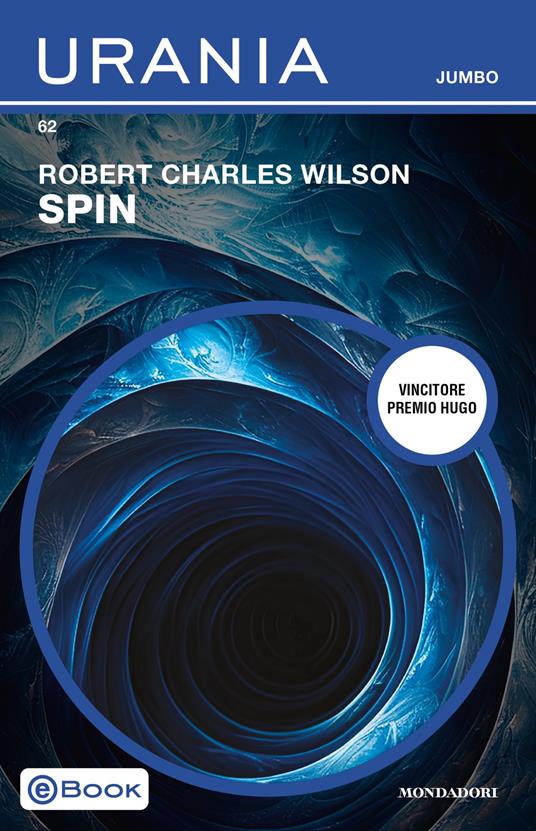
Tyler ha dodici anni quando, con gli amici Jason e Diane Lawton, dal cortile di casa vede la volta celeste spegnersi. In quella notte di ottobre avviene quello che verrà chiamato il "grande blackout": al posto delle stelle compare una barriera nera, piatta e vuota. Il Sole diventa solo una fonte di calore, non è più un oggetto astronomico, la Luna scompare, ma restano le maree. I satelliti artificiali escono dalle loro orbite e i resti rivelano un deterioramento è come se il tempo, fuori dalla barriera, passasse più in fretta. Dopo anni di indagini, mentre Tyler, Jason e Diane crescono, si scopre che un anno terrestre equivale a più di cento milioni all'esterno della barriera. La fine della nostra stella è vicina e la vita sulla Terra non è più possibile... Spin ha vinto il premio Hugo come miglior romanzo nel 2006.
Tyler ha dodici anni quando, con gli amici Jason e Diane Lawton, dal cortile di casa vede la volta celeste spegnersi. In quella notte di ottobre avviene quello che verrà chiamato il "grande blackout": al posto delle stelle compare una barriera nera, piatta e vuota. Il Sole diventa solo una fonte di calore, non è più un oggetto astronomico, la Luna scompare, ma restano le maree. I satelliti artificiali escono dalle loro orbite e i resti rivelano un deterioramento è come se il tempo, fuori dalla barriera, passasse più in fretta. Dopo anni di indagini, mentre Tyler, Jason e Diane crescono, si scopre che un anno terrestre equivale a più di cento milioni all'esterno della barriera. La fine della nostra stella è vicina e la vita sulla Terra non è più possibile... Spin ha vinto il premio Hugo come miglior romanzo nel 2006.
Mentre la storia si svolge il romanzo diventa sempre più interessante. L'ambientazione è curiosa e la fantascienza simile al problema dei tre corpi. Bello!
Mentre la storia si svolge il romanzo diventa sempre più interessante.
L'ambientazione è curiosa e la fantascienza simile al problema dei tre corpi.
Bello!
I like this book, but found the ending anticlimactic. The plot development got a little choppy, with all the flashbacks and flash-forwards. The storyline itself wasn't hard to follow, developing nicely with the characters.
I can't really put this book into the "Hard" Science Fiction category. I had a couple of moments of "suspension of disbelief". Logic holes are never good in Hard SciFi. And there was a bit too much of the Black Box technique, whereby we are forced to just accept without explanation that this thing works.
Hence, the two stars. I might be a touch stingy with my star ratings. I looked over my first wave of books, and found that everything was at least four stars. I did like this book, but I'm getting cranky as I use this website more and more.
I like this book, but found the ending anticlimactic. The plot development got a little choppy, with all the flashbacks and flash-forwards. The storyline itself wasn't hard to follow, developing nicely with the characters.
I can't really put this book into the "Hard" Science Fiction category. I had a couple of moments of "suspension of disbelief". Logic holes are never good in Hard SciFi. And there was a bit too much of the Black Box technique, whereby we are forced to just accept without explanation that this thing works.
Hence, the two stars. I might be a touch stingy with my star ratings. I looked over my first wave of books, and found that everything was at least four stars. I did like this book, but I'm getting cranky as I use this website more and more.